



Building Confidence: 7 Proven Strategies That Work
Table of Contents
- Building Confidence From the Inside Out
- Daily Affirmations for Confidence That Stick
- Silence Your Inner Critic and Embrace Self-Compassion
- Body Positivity Tips for Real Self-Esteem
- Master Your Body Language and Eye Contact
- Self-Love Journal Prompts for Personal Growth
- Take Action: Small Goals That Build Real Momentum
- Confidence vs. Arrogance: Know the Difference
- Frequently Asked Questions
Last Updated: September 23, 2026
Building Confidence From the Inside Out
Building confidence starts with understanding that it's not about becoming someone else, it's about recognizing the strength you already possess. Confidence is the belief in your own abilities and worth, and it grows when you stop waiting for external validation and start building it from within.
At My Beautiful Fluff, we believe that true confidence comes from self-acceptance. When you embrace who you are right now, not ten pounds from now or when you achieve some distant goal, that's when real confidence emerges. It's the foundation for everything else.

The journey of building confidence isn't linear. Some days feel easier than others. But the strategies that work are surprisingly simple: they involve shifting how you talk to yourself, how you carry your body, and how you show up in the world. Below, we'll walk through seven proven approaches that actually create lasting change.
Daily Affirmations for Confidence That Stick
Daily affirmations work because they interrupt the default negative self-talk that runs in the background of most people's minds. When you repeat a positive statement intentionally, you're essentially retraining your brain to notice evidence that supports it rather than evidence against it.
The key is specificity. Generic affirmations like "I am confident" feel hollow. Instead, tie your affirmations to real actions and outcomes: "I speak my ideas clearly in meetings" or "I deserve to take up space and be heard." These connect to actual behaviors you can observe and reinforce.
Start with just one affirmation in the morning. Say it three times while looking at yourself in the mirror. This feels awkward at first, that's normal. The awkwardness fades after about two weeks when your brain stops fighting the message and starts accepting it.
Write your affirmation somewhere visible. Your bathroom mirror, your phone lock screen, your car dashboard. Repetition is what makes affirmations work, not eloquence. The more you see it, the more it becomes part of how you think about yourself.
:::pro tip Pair your affirmation with a physical anchor. Touch your heart or press your hand to your chest when you say it. This creates a somatic connection that makes the affirmation stick faster.
Silence Your Inner Critic and Embrace Self-Compassion
The inner critic is that voice that whispers you're not good enough, not ready, not worthy. It's relentless and it sounds like truth, but it's just a habit of thinking. One of the most direct paths to building confidence is learning to recognize that voice and treat it with compassion rather than resistance.
When you fight your inner critic, it gets louder. When you acknowledge it with curiosity instead, "Interesting, that's what fear sounds like right now", it loses its grip. Self-compassion means treating yourself the way you'd treat a friend who's struggling. You wouldn't tell a friend she's too flawed to try. You'd encourage her.
A practical way to shift this is through self-talk reframing. When your inner critic says "You'll fail," pause and ask: "Is that true, or is that fear talking?" Then respond to yourself with kindness. "I might not succeed on the first try, and that's how learning works. I'm going to try anyway."
This doesn't mean ignoring real feedback or pretending you never make mistakes. It means distinguishing between constructive criticism (useful information) and destructive self-judgment (just noise). Building confidence requires you to listen to the first and dismiss the second.
Body Positivity Tips for Real Self-Esteem
How you feel about your body directly affects how much confidence you project. Body positivity isn't about loving every inch of yourself all the time, it's about deciding that your body's worth isn't conditional on its appearance.
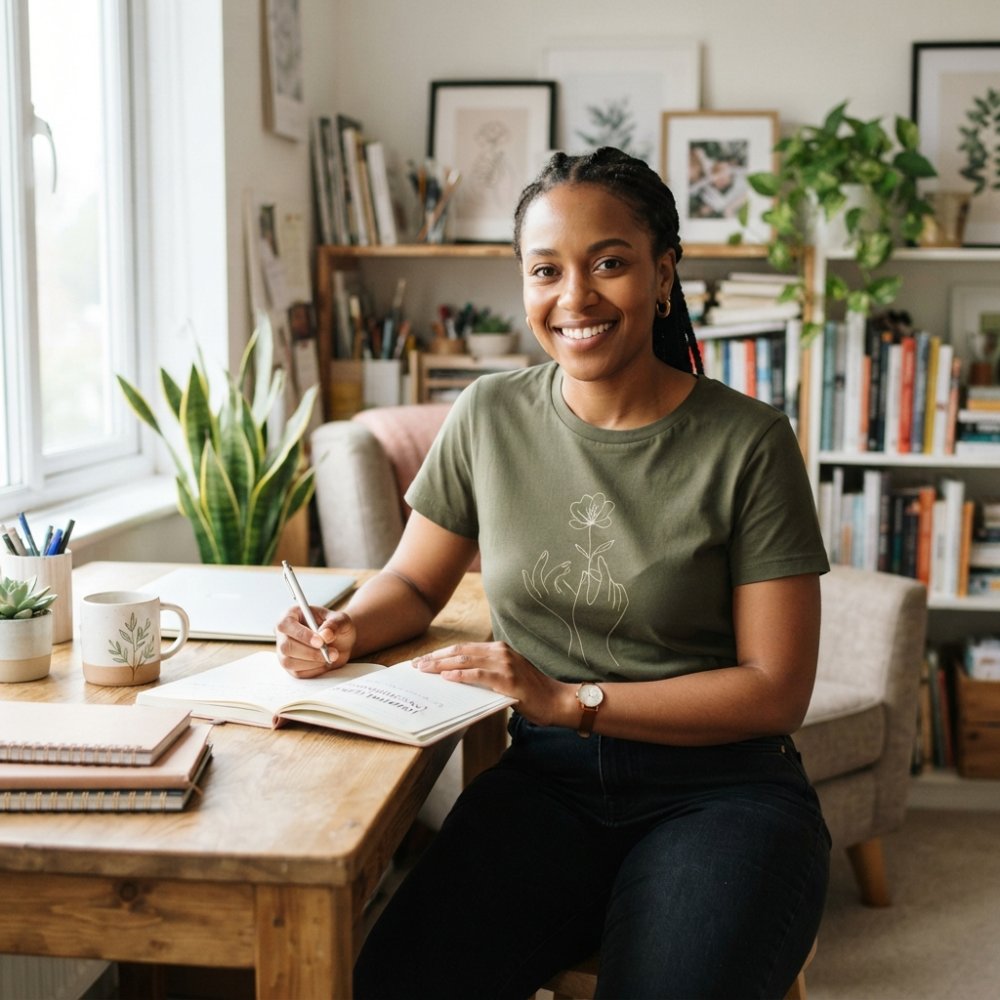
One of the most effective body positivity practices is wearing clothes that fit well and make you feel good right now. Not "when I fit into this size" or "when I lose weight." Now. Clothes that fit properly and align with your personal style send a signal to your brain that you're worth investing in. My Beautiful Fluff's collection, including pieces like the "Love Your Body Today" tee and "Your Fluff Is Not a Flaw, It's a Feature" shirt, are designed specifically for this, graphic tees and apparel in sizes up to 7XL that celebrate your curves rather than hide them.

When you wear something that fits your body as it is and carries a message of self-acceptance, you're not just changing what you see in the mirror. You're changing your internal narrative. Your body becomes something to appreciate rather than something to fix.
Another practical step is eliminating language that diminishes your body. Stop saying "I'm so fat" or "I hate my thighs" even as a joke. These casual criticisms reinforce negative associations. Replace them with neutral or positive observations: "My body is strong" or "I have curves I'm proud of."
Master Your Body Language and Eye Contact
Confidence is visible before it's felt. How you stand, where you direct your gaze, and how you move through space all communicate something to others and, more importantly, to yourself. This is where body language becomes a tool for building confidence rather than just a symptom of it. Adopting an open posture reinforces this internal state, much like the subtle adjustments required for improving skin confidence during the formative years of adolescence.
Eye contact is one of the most powerful confidence signals. When you look someone in the eye during a conversation, you're communicating that you're present and that what you're saying (or hearing) matters. If sustained eye contact feels uncomfortable, start with the "triangle technique": look at one eye, then the other, then the mouth, cycling through. This feels natural and maintains connection without the intensity of constant eye contact.
Your posture shapes how confident you feel. Standing or sitting with your shoulders back and your spine straight literally changes your neurochemistry. Research shows that adopting an "open" posture, chest forward, arms uncrossed, increases feelings of confidence and reduces stress hormones. You don't have to force an exaggerated pose. Just uncross your arms, drop your shoulders back, and take up the space you're entitled to.
When you're speaking, slow down. Confidence often sounds like calm. People who rush their words sound nervous; people who speak deliberately sound assured. Pause between thoughts. Let silence exist. This also gives your brain time to access what you actually want to say rather than just reacting.
Self-Love Journal Prompts for Personal Growth
Journaling is one of the most underrated tools for building confidence because it creates a dialogue between your conscious mind and your deeper self. When you write, you're not performing for anyone. You're just being honest on the page.
My Beautiful Fluff's Self Love Notebook is designed exactly for this purpose, 100 pages of space to explore your thoughts, dreams, and reflections. The practice of journaling regularly helps you track patterns in your thinking and recognize how far you've come.
Here are some prompts to get started:
- What's one thing I did today that took courage, no matter how small?
- When did I feel most like myself this week?
- What would I do if I knew I couldn't fail?
- What strengths do I have that I don't give myself credit for?
- What does self-love look like for me in practical terms?
- When do I feel most confident, and what's happening in those moments?
Write without editing. Don't worry about grammar or making it sound good. The goal is to get your real thoughts onto the page. Over time, journaling becomes a record of your growth. You'll look back and see how much your self-perception has shifted.
Journaling also helps you process difficult emotions and experiences.
Take Action: Small Goals That Build Real Momentum
Confidence is built through evidence. When you accomplish something, no matter how small, your brain registers that as proof that you're capable. This is why taking action, even action that feels uncomfortable, is essential for building confidence.
Confidence vs. Arrogance: Know the Difference
True confidence and arrogance are often confused, but they're opposites. Confidence is quiet. Arrogance is loud. Confidence knows its limits. Arrogance pretends it has none.
Frequently Asked Questions
What is the fastest way to build confidence?
There's no instant shortcut, but small wins compound quickly. Start by setting one achievable goal this week and completing it. Physical self-care, wearing clothes that make you feel good, moving your body, grooming, delivers immediate confidence boosts. Pair that with one positive affirmation spoken aloud each morning. Most people notice a shift within 2-3 weeks when these practices become routine.
How can I build my confidence when I feel insecure about my body?
Body positivity tips focus on shifting from judgment to appreciation. Wear clothes that fit well and make you feel powerful, not clothes you're waiting to shrink into. Practice the mirror exercise: stand in front of a mirror and name three things your body does well (strength, movement, resilience). Use a self-love journal to track moments when you felt good in your skin. Surrounding yourself with body-positive community and messaging, like graphic tees with affirming messages, reinforces that your body is worthy of celebration right now.
How does fashion influence self-esteem?
What you wear sends signals to your brain about how you should feel. Clothes that fit well, match your style, and align with your values create what psychologists call 'enclothed cognition', your outfit literally influences your behavior and confidence. Inclusive sizing up to 7XL means you can find pieces designed for your body, not stretched versions of smaller sizes. When fashion celebrates curves instead of hiding them, self-esteem rises naturally because you're not fighting your clothes, you're partnering with them.
What role does self-education play in building confidence?
Knowledge reduces fear and builds self-efficacy. Learning about body positivity, emotional intelligence, and resilience gives you frameworks to understand your own patterns. Reading books, journaling through self-love journal prompts, and consuming content from communities that celebrate diversity all expand your perspective and reduce social anxiety. The more you understand yourself and others, the less power self-doubt holds over you.